Printmaking is a dynamic art form that merges creativity with technical skill, offering artists a unique avenue for expression. This technique not only allows for the reproduction of images but also serves as a powerful medium for individual artistic expression. Artists can explore various styles and methods, from traditional relief printing to contemporary techniques, each with its distinctive appeal.
The versatility of printmaking lends itself to endless possibilities. It encourages experimentation, enabling creators to manipulate textures and colours in ways that challenge conventional art forms. Through printmaking, artists can share their vision on a broader scale, making their work accessible to a larger audience.
Engaging with the world of printmaking opens up a dialogue about artistry and innovation. Those interested in exploring this medium will find that it encapsulates a rich history while remaining relevant in today’s evolving art landscape. The techniques and processes involved continue to inspire both established and emerging artists alike.
Historical Context and Evolution of Printmaking
Printmaking has a rich history that spans centuries, beginning with early methods of producing images and text. Its evolution reflects significant cultural and artistic changes, particularly during the Renaissance and into modern contexts.
Origins and Development
The origins of printmaking can be traced to ancient civilisations, where techniques like woodblock printing emerged in China around the 2nd century. By the 15th century, this method reached Europe, coinciding with Johannes Gutenberg’s invention of the printing press in 1440. This innovation revolutionised communication, enabling the mass production of texts and images.
Printmaking techniques diversified over time, including engraving and etching. Each method allowed for different levels of detail and style, influencing various art movements. The ability to reproduce artworks enabled wider dissemination of ideas, fostering greater cultural exchange.
Influence of the Renaissance
The Renaissance marked a pivotal moment in the evolution of printmaking. Artists began to view printmaking not just as a reproduction method but as an art form in its own right. The use of prints became a means for artists to share their work with a broader audience.
Notable figures like Albrecht Dürer employed woodcuts and engravings, combining artistic skill with technical mastery. The period also saw the rise of Japonism, where European artists were influenced by Japanese woodblock prints, particularly in terms of composition and colour. This cross-cultural engagement enriched both European and Japanese artistic practices.
Printmaking in Modern and Contemporary Art
In modern and contemporary art, printmaking has continued to evolve, with artists exploring new techniques and technologies. The 20th century introduced processes such as lithography and screen printing, which allowed for greater experimentation. Artists like Andy Warhol harnessed these methods for social commentary, blurring the lines between commercial and fine art.
Contemporary printmaking also embraces diverse influences, integrating digital techniques alongside traditional practices. Artists explore themes of identity, politics, and culture through print media, demonstrating its ongoing relevance. The art form remains significant in cultural dialogues, emphasising its role in the evolution of visual communication.
Methods and Techniques
This section explores various methods and techniques in printmaking, highlighting the unique processes and materials involved. Each technique offers distinct results, contributing to the artist’s expression and the overall quality of prints.
Relief Printing
Relief printing involves carving away material from a flat surface, leaving the raised areas to receive ink. Common methods include woodcut and linocut.
In the woodcut, images are carved into a wooden block, while linocut uses a softer linoleum material. The artist applies ink to the raised surface and presses it onto paper using a printing press or by hand.
This method allows for dynamic textures and bold designs. It is a versatile technique used for fine art, book illustrations, and more.
Intaglio Printing
Intaglio techniques require incising or engraving into a plate. This plate is then inked; the ink settles in the recessed areas.
Common intaglio methods include etching, aquatint, and engraving. In etching, a metal plate is coated with a waxy ground before being exposed to acid. Aquatint creates tonal areas by applying a powdered resin.
Each method produces fine lines and intricate details, ideal for detailed imagery. The etching press plays a critical role in transferring the image to paper.
Planographic Processes
Planographic processes, like lithography, rely on the flatness of the printing surface. In lithography, an image is drawn with a greasy substance on a flat stone or metal plate.
The process involves applying water to the non-image areas and grease-based ink to the image, which repels water. This method allows for a range of textures and is valued for its flexibility.
Lithography is well-suited for fine art, commercial printing, and large editions due to its reproducibility.
Stencil Techniques
Stencil techniques involve creating a design on a sheet, which is then used to apply ink through cut-out areas. Screen printing, also known as silkscreen, is a popular form of stencil printing.
In screen printing, ink is pushed through a mesh screen onto the substrate. This method is versatile and allows for the layering of colours. Artists can create both subtle and bold effects, making it a favourite in textiles and poster art.
Stencil techniques are excellent for producing multiple copies efficiently, making them popular among commercial artists.
Digital Printmaking
Digital printmaking has transformed the landscape of traditional print methods. This technique utilizes digital tools like printers and computers to produce images directly from digital files.
Digital printers deliver high-quality reproductions with exceptional color fidelity-perfect for custom apparel, vinyl decals, the best coloring book printing services, and much more.
This process offers incredible versatility, from large-scale prints to intricate details, catering to a diverse range of artistic expressions. Digital printmaking continues to evolve, pushing the boundaries of what is possible in the printmaking realm.
Artistic Elements and Materials
The artistic elements and materials used in printmaking are crucial for achieving desired effects. These components influence texture, colour, and overall visual impact, allowing artists to express their unique styles. Understanding the significance of each aspect enhances the quality of the final prints.
Exploring Texture and Depth
Texture plays a vital role in printmaking, adding dimension and interest to each piece. Techniques such as relief printing, intaglio, and lithography allow artists to create varied surfaces.
Relief printing, for instance, involves carving into a surface, resulting in raised areas that produce texture when inked. Artists may also utilise materials like canvas, paper, or even metal to enhance the tactile quality of their work.
By layering prints or using varying pressures, artists can create depth. Experimentation with these techniques enables the exploration of unique textural combinations that invite the viewer to engage with the work.
Colour and Line Variation
Colour and line variations are fundamental to the expressive potential of printmaking. Artists often employ techniques such as silkscreen printing to layer colours, achieving vibrancy and richness.
The choice of inks-whether water-based or solvent-based-contributes significantly to the colour palette. Artists can mix colours directly on the substrate or layer them to create gradients and nuances.
Line work, achieved through various tools and methods, adds another layer of expression. Varying line thickness and style enhance the overall composition and can guide the viewer’s eye throughout the piece.
Choice of Substrates
Selecting the right substrate is essential in printmaking. Paper types, such as cotton, rag, or bamboo, each offer unique qualities that affect how ink interacts with the surface.
A heavier paper can absorb more ink, while lighter paper may allow for fine details. Artists must consider the intended visual effect when choosing substrates.
Some artists also experiment with non-traditional substrates like fabric, wood, or acrylic surfaces. This material exploration opens up new avenues for creativity and can lead to innovative results that push the boundaries of conventional printmaking.
Printing Plates and Tools
The choice of printing plates and tools significantly impacts the printmaking process. Various materials, such as wood, linoleum, or metal, are used to create the matrix for printing. Each material produces different results in texture and detail.
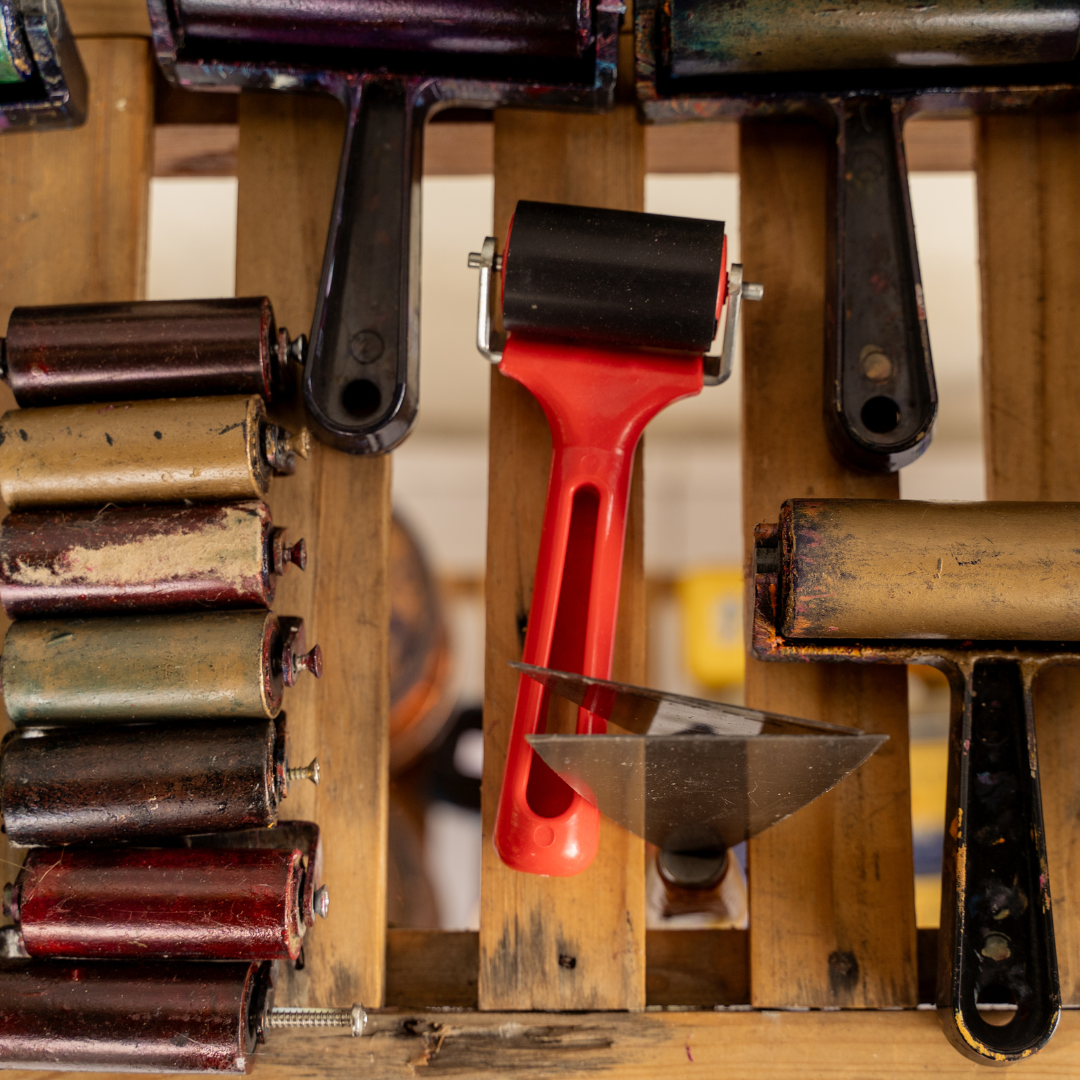
Tools like brayers, barens, and carving knives are essential for manipulating the medium. Artists must choose tools that suit their techniques and desired outcomes.
Experimentation with different combinations of plates and tools allows for greater artistic freedom. The results can range from finely detailed prints to more abstract interpretations, showcasing the versatility of printmaking as a medium.
Cultural and Commercial Impact
Printmaking plays a significant role in both cultural expression and commercial viability. Through its various forms, it serves as a medium for artistic innovation and societal reflection, influencing graphic design, illustration, and social commentary. Its techniques and visual impact are often harnessed in creating memorable print ads that capture attention and communicate powerful messages.
Printmaking in Graphic Design and Illustration
In graphic design and illustration, printmaking techniques contribute significantly to visual communication. Designers often utilise methods like screen printing and lithography to create unique imagery that captures attention.
The tactile qualities of print enhance the viewer’s experience. Original prints and limited edition prints offer distinctiveness and authenticity, which are often favoured in niche markets. The use of printmaking in branding and advertising allows for creative expression that often resonates with consumers on a personal level.
Social and Political Roles of Print
Printmaking has historically served as a powerful tool for social and political commentary. Artists have used the medium to address pressing issues, employing bold imagery and text to provoke thought and inspire action.
Movements such as Pop Art exemplify this practice, where artists challenge consumer culture. Political posters have also played a crucial role, utilising mass production to disseminate their messages broadly. This accessibility allows for a wider audience engagement, prompting discussions about societal norms and injustices.
Printmaking as a Democratic Art Form
Printmaking is often regarded as a democratic art form due to its accessibility and repeatability. Techniques like linocut or silkscreen require minimal resources, enabling a diverse range of artists to participate.
The ability to produce multiple copies from a single matrix ensures that art is not limited to elite collections. Instead, it promotes inclusivity, making original art more attainable. This characteristic allows artists to reach diverse audiences, fostering a community that values both fine arts and social engagement.
Leave a Reply