
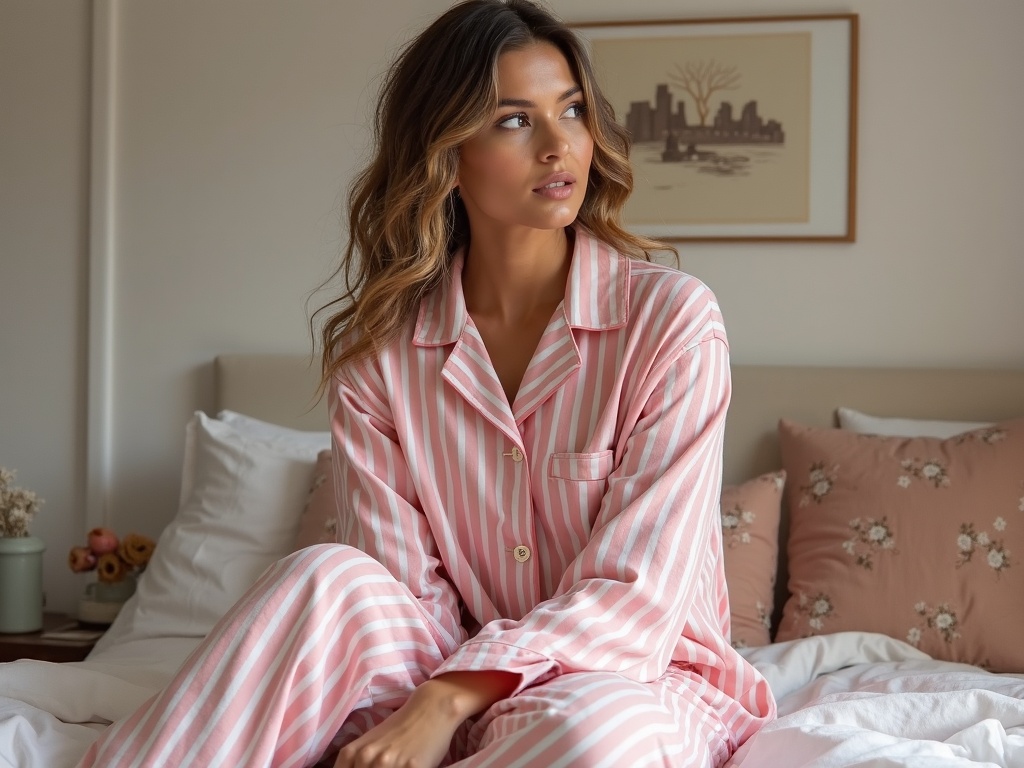
Why Your Evening Routine Needs a Wardrobe Reset for Better Rest
Most people spend serious money on mattresses and blackout curtains, then crawl into bed wearing whatever they grabbed off the floor. What you wear to bed isn’t an afterthought – it’s an active variable in how well your nervous system shuts down. Get it wrong and your clothes are working against your biology from the moment you lie down.
Your Clothes Send Signals Your Brain Actually Listens To
Changing out of day clothes isn’t just a hygiene habit. It’s a behavioral cue that primes the brain for rest. Psychologists call this an "anchor" – a repeated action tied to a specific mental state. When you do the same thing each night in the same order, the brain starts treating that action as a trigger.
Cortisol, the stress hormone, needs to drop steadily through the evening before sleep can take hold. Physical comfort plays a direct role in that drop. Sitting in stiff jeans or a scratchy work shirt keeps the body in a mild state of tension. Soft, loose clothing removes that friction and gives the nervous system one less reason to stay alert.
This is why building an evening routine around pajamas – an "evening uniform" – works better than informal winding down. The act of changing becomes the signal. The brain learns to associate it with lowering its guard.
Fabric Isn’t A Luxury Consideration
Temperature regulation plays a vital role in the process of falling asleep. In order for sleep to occur, the body’s core temperature must drop slightly. This decrease in temperature continues as you progress through the various stages of sleep. Anything that hinders the release of heat or moisture due to perspiration can lead to an uncomfortable increase in body temperature.
Synthetic fabrics (e.g., polyester or a lot of the stuff you see in athletic wear) tend to be weak in the vapor permeability department. Put simply, they don’t breathe well, which makes that layer of warm, damp air between your skin and your fabric stagnate. Your body becomes unable to effectively transfer heat and moisture to the surrounding environment – one of the key mechanisms it uses to cool itself down.
Natural fibers, on the other hand, handle this heat and moisture transfer well. Cotton breathes decently, but materials like modal and bamboo viscose absorb moisture and wick it away quickly. Over time, they also retain a softer feel to the skin than many other wicking materials. High-quality pajamas made from these fibers allow the body to easily transfer heat and moisture, without any additional effort or discomfort on your part.
According to a study published in the journal “Nature and Science of Sleep”, people wearing more breathable, natural type fibers have been shown to fall asleep at least 15 minutes faster than those who wear synthetics. But according to the same study, for most folks it’s probably the difference between desperately trying to recall details of all your old schoolbooks and family crests, and getting solid, restful sleep.
Fit Matters More Than Most People Realize
Sleeping isn’t consistent. During the night, our bodies go through different phases of sleep, and we change positions dozens of times. Tight clothing, like a constricting waistband, sleeves that constrain your shoulders, or anything tight around your chest, creates friction with that movement.
Sleepwear that is too tight hinders circulation and causes your body to move into lighter phases of sleep. Tactile sensitivity can also cause small wake-ups that you won’t remember, but you will wake up feeling less rested. Then there’s the seam issue: because your brain isn’t busy processing external sensory data, a tag or an uncomfortable seam is perceived much more acutely. What didn’t bother you during the day now feels like a distraction at 1 a.m.
Sleepwear As A Skin-Care Layer
Nobody really talks about this, but what you wear to bed is doing quiet work for your skin every night.
While you sleep, your body is in full repair mode – regenerating cells, releasing oils, sweating through its recovery cycle. That output has to go somewhere. Your sleepwear absorbs a good portion of it before it ever reaches your sheets, which means the fabric sitting against your skin all night actually matters quite a bit.
The breathability question is the main one. Non-breathable fabrics trap moisture against the skin rather than pulling it away, and that prolonged dampness is a known irritant; it can inflame sensitive skin, clog pores, or aggravate conditions like acne and eczema. Fabrics that wick or absorb and disperse moisture keep the skin surface drier, and as a side effect, reduce the build-up on your pillowcase that causes its own problems over time.
The other piece is washing frequency. Most people launder their sleepwear less often than they should, which defeats the purpose entirely – once those fibers are saturated, they stop absorbing anything new. Even high-quality fabric becomes useless at that point. Treat sleepwear closer to how you’d treat gym kit: it’s managing sweat and oils, so the same logic applies.
It’s a small thing, but it’s one of those where the benefit compounds quietly over time.
What An Actual Wardrobe Reset Looks Like
You don’t need to make wholesale changes. Introduce one or two pairs of sleep-specific clothing made from natural fibers. Not multi-use clothing you also watch TV in; you want your body to recognize these clothes and respond with sleep. Integrate the changing of clothes into your nightly routine, so that it happens at roughly the same time, in the same way, each evening.
This isn’t about comfort in a pampering sense, it’s about removing the easy, physical, and mental barriers in your way which stop the body from resting when it already is. Melatonin’s been released, core temperature’s dropping, those are processes your body does automatically. The right clothes just stop your clothes from screwing it up.
Leave a Reply